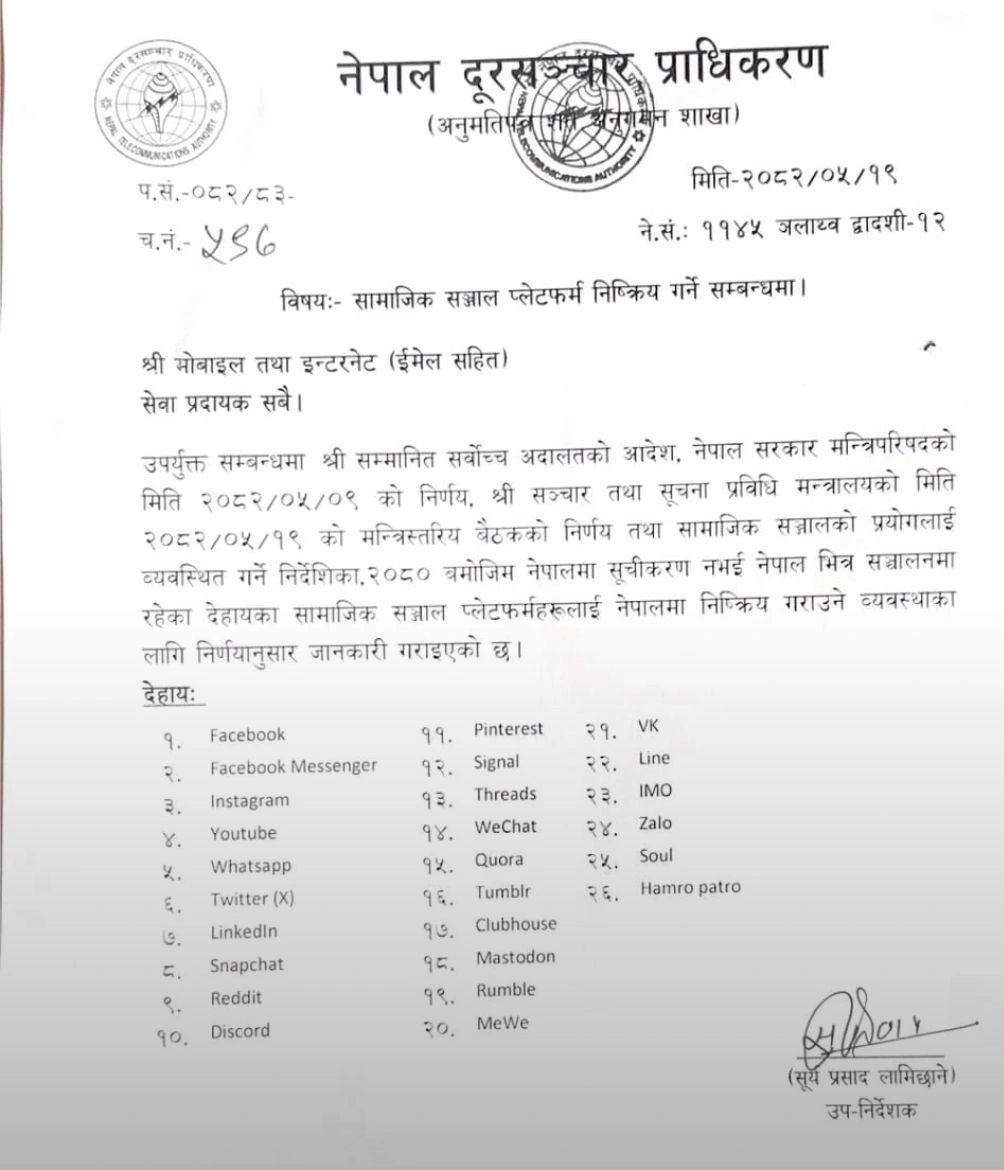
Kathmandu, August 25, 2025: Nepal has entered into a state of unprecedented Digital Authoritarianism with 26 social media blocked. The Nepal government ordered internet service providers to block dozens of major social platforms including Facebook, Instagram, WhatsApp, X, YouTube, Reddit and LinkedIn after those companies failed to meet a new requirement to register locally and appoint local grievance officers. This abrupt step has triggered confusion among users and raised concerns about transparency, accountability, and freedom of expression.
The government frames the action as enforcement of its social media registration and moderation rules under the new Social Media Directives . Officials say the rules are meant to improve accountability, make platforms responsive to user complaints in Nepal, reduce online fraud and hate speech, and bring foreign platforms under local legal obligations. The government points to missed registration deadlines and to a need for local grievance processes as the legal basis for blocking services.
The official rationale for the sweeping ban has not yet been fully explained. Authorities have only stated that the platforms were failing to comply with Nepal’s laws and tax obligations. However, the context is complex. On 8 November 2024, The Rising Nepal reported that 20 major foreign tech companies, including Apple, Google, Microsoft, Meta, X, and Netflix, had begun paying a two percent digital service tax (DST) to Nepal’s Big Taxpayers Office. The DST was first introduced in the 2079/20 Financial Act, but enforcement has been uneven, with some digital service providers still not paying the tax even after two years.
This enforcement gap, combined with public speculation that companies like Meta and LinkedIn are already registered in Nepal, has added to the confusion. Many see the ban as part of a broader attempt to pressure global tech giants to comply with Nepal’s rules. Others view it as a disproportionate measure that punishes ordinary users and small businesses that depend on these platforms.
Lack of legal clarity and oversight. Observers say the registration rules and the enforcement process lack transparent standards, independent judicial oversight, and clear protections for freedom of expression. That creates the risk that “content moderation” becomes a pretext for removing criticism of the government.
Timing and political context, the blackout came at a politically sensitive time, with youth protests and broader political unrest already in the country. Critics argue the move functioned like a pressure valve to limit organizing, reporting and rapid spread of information that could mobilize dissent. Multiple observers tied the bans to a broader pattern of tightening civic space and regulating platforms in ways that disadvantage independent voices.
There are two separate claims that get mixed together under this label.
Claim A: The ban is a coordinated political move specifically targeting US tech firms for geopolitical reasons.
Claim B: The ban is a US technology purge in favour of Chinese alternatives or influence.
In the background Prime Minister K.P. Sharma Oli made an official visit to China just before and sought support for infrastructure and economic cooperation. Media coverage framed the trip as a push for Chinese investments and a rebalancing of Nepal’s foreign relations. Given that background, some critics see the social media rules and the later enforcement as part of a larger shift toward closer ties with Beijing and toward internet governance norms that favor state control.
As things stand, Nepal is in a “wait and watch” moment. Whether the ban will push global companies to comply with local laws or backfire by isolating the country’s digital economy remains to be seen.
Nepal’s new social media rules require platforms to share user data, take down content, and delete accounts without proper oversight under the new Social Media Directives . This goes against international standards, which say restrictions should be necessary, proportionate, time-limited, transparent, and overseen independently. Platforms aren’t avoiding registration because they dislike regulation, but because these vague rules risk user #privacy and force them to break their own policies.
The evidence and counterarguments point to the stronger conspiracy claims around a blanket ban of US platforms, and link the episode to Prime Minister K.P. Sharma Oli’s recent China visit and broader geopolitical context.
